 An official website of the United States government
Graph titled Use of Complementary Health Approaches for Pain: 20-Year Trends
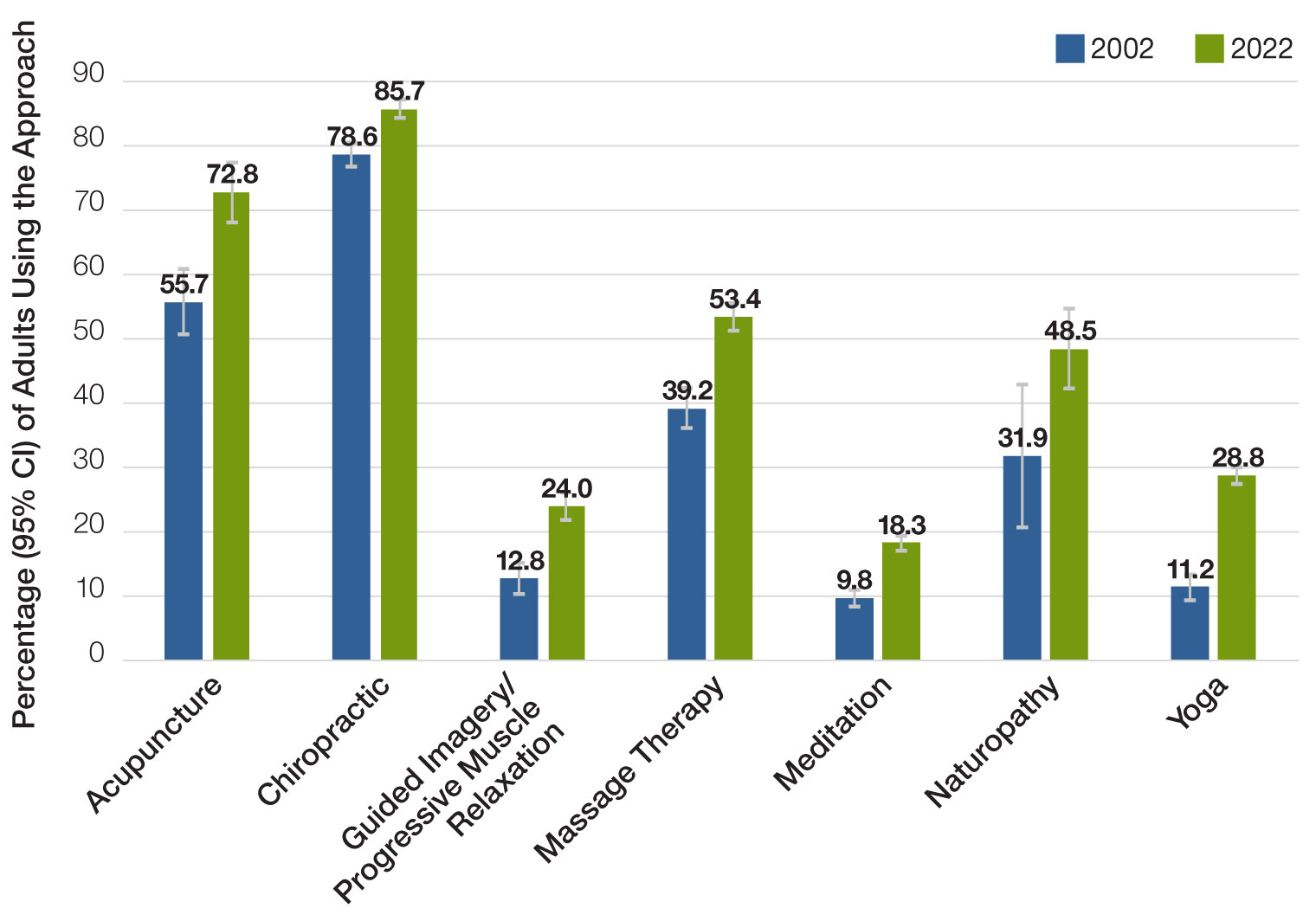
Vertical bar graph showing percentages of adult users of complementary health approaches who used them for pain in 2002 and 2022.
In 2002, 55.7 percent of acupuncture users used it for pain.
In 2022, 72.8 percent of acupuncture users used it for pain.
In 2002, 78.6 percent of chiropractic users used it for pain.
In 2022, 85.7 percent of chiropractic users used it for pain.
In 2002, 12.8 percent of guided imagery/progressive muscle relaxation users used it for pain.
In 2022, 24.0 percent of guided imagery/progressive muscle relaxation users used it for pain.
In 2002, 39.2 percent of massage therapy users used it for pain.
In 2022, 53.4 percent of massage therapy users used it for pain.
In 2002, 9.8 percent of meditation users used it for pain.
In 2022, 18.3 percent of meditation users used it for pain.
In 2002, 31.9 percent of naturopathy users used it for pain.
In 2022, 48.5 percent of naturopathy users used it for pain.
In 2002, 11.2 percent of yoga users used it for pain.
In 2022, 28.8 percent of yoga users used it for pain.
Source
- Nahin RL, Rhee A, Stussman B. Use of complementary health approaches overall and for pain management by US adults. JAMA. 2024;331(7):613-615.